


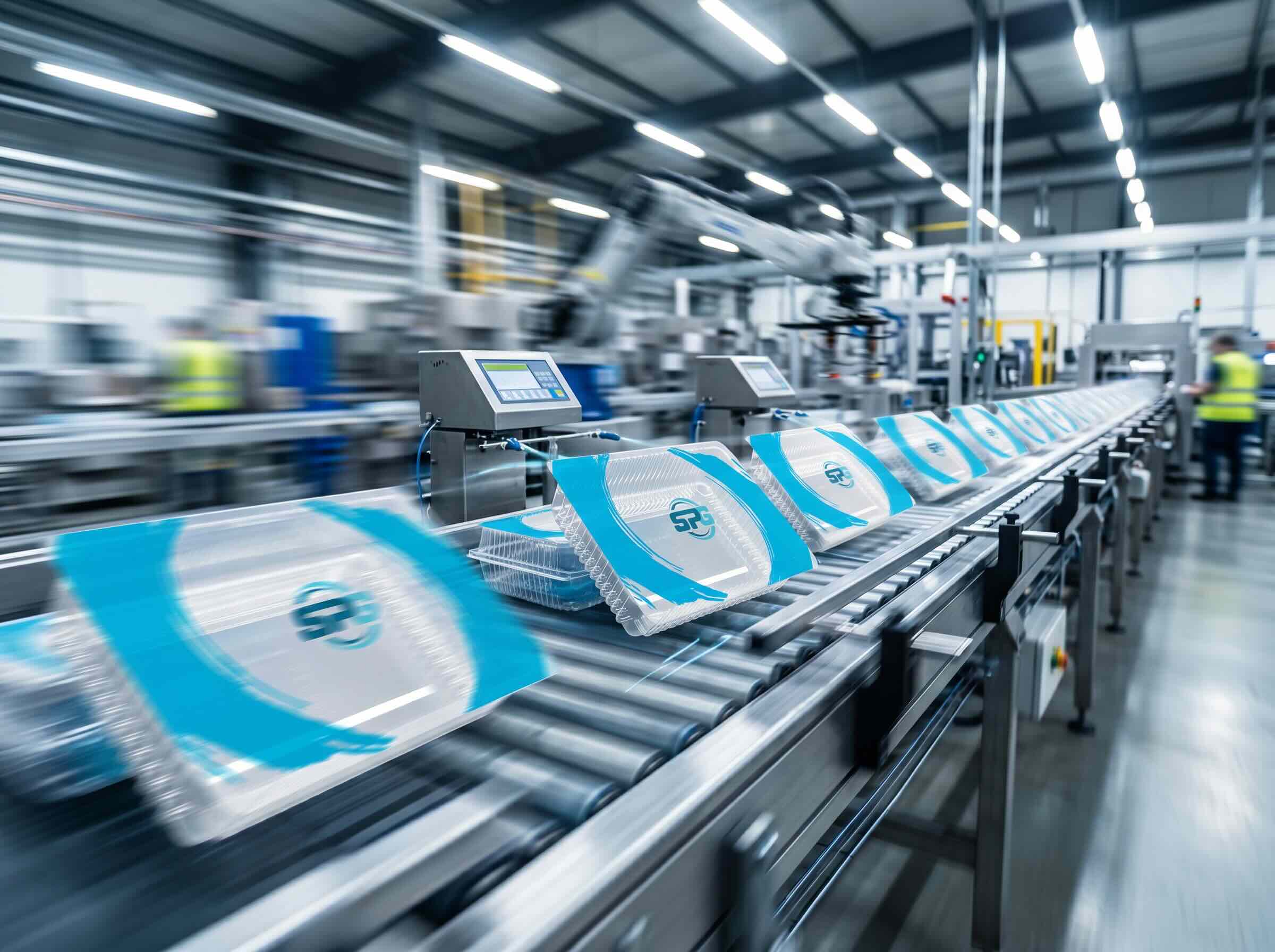
Recyclable thermoformed packaging is not simply a tray made from a plastic that can be recycled. To be genuinely recyclable, it must be identifiable and sortable at a sorting facility, processable without compromising the quality of the recovered material, and supported by a viable recycling route.
In food packaging, this means assessing the entire pack, including the heat-sealable lidding film, base film where applicable, labels and adhesives. Choosing unsuitable components can make recycling more difficult, even when the tray itself is made from PET or PP.
In this article, we explain the requirements thermoformed packaging must meet,, how its recyclability is assessed, and what to consider before selecting packaging materials.
What makes thermoformed packaging recyclable?
Thermoformed packaging is considered recyclable when it can be collected, sorted and reprocessed through available recycling systems to produce usable secondary raw materials.
Although plastic thermoforming makes it possible to manufacture trays using different materials and specifications, recyclability depends on whether the complete packaging structure is compatible with existing processes and can be recycled at scale.
This definition is linked to the objectives of Regulation (EU) 2025/40 on Packaging and Packaging Waste (PPWR), which introduces new requirements to improve the recyclability of packaging placed on the European Union market. Under its implementation timetable, the Regulation provides for design-for-recycling criteria from 2030 and recyclability-at-scale requirements from 2035 subject to the applicable implementing measures and assessment criteria.
It is therefore important to distinguish between two concepts:
- Technical recyclability: the packaging can be processed using a suitable recycling technology.
- Recyclability in practice: systems are available to collect, sort and recycle the packaging under real-world conditions.
The tests a thermoformed tray must pass
To assess the recyclability of a thermoformed tray, three aspects must be examined: its identification at sorting facilities, the compatibility of its components, and the potential to reuse the recovered plastic.
Identification at sorting facilities
Sorting facilities use technologies such as near-infrared (NIR) detection to identify and separate different plastic types.
Problems can arise with certain black trays, as some pigments absorb near-infrared radiation, making it difficult or even impossible to identify the polymer.
Although NIR-detectable black pigments are available, their performance must be verified through sorting tests.
Compatibility between the tray and lidding film
Compatibility between the lidding film and the tray is one of the key aspects to assess when developing recyclable thermoformed packaging. It is not just the polymer used that matters, but also how the different components behave during sorting and recycling.
When selecting a recyclable lidding film, the following factors should be considered:
- Polymer: assess PET/PET or PP/PP combinations that are compatible with the intended recycling stream, taking into account the complete structure rather than the main polymer alone. Sealing layers: check that they do not interfere with reprocessing.
- Separability: assess whether the lid can be separated from the tray and how this affects the recycling process.
- Inks and adhesives: verify that they do not contaminate the recovered plastic.
- Barrier layers: evaluate the compatibility of functional barriers, such as EVOH or other barrier technologies, with the intended recycling process.
Using the same polymer for both the tray and the lid can facilitate design for recycling, but it does not automatically guarantee compatibility.
The recyclability of the complete packaging structure must be assessed according to the requirements of the relevant recycling stream.
Reuse of recovered plastic
Once recovered, the plastic must retain suitable properties for use in new products. Facilities and businesses capable of processing and using the material must also be available.
Two conditions must therefore be met:
- Recycled material quality: the process must produce flakes or pellets with properties suitable for further processing.
- Commercial outlets: industrial processes and markets must exist to use the recovered plastic.
It is also important to consider that recycling routes may differ depending on the polymer and packaging format. For example, PET thermoformed trays do not necessarily follow the same recycling processes as PET bottles, and the availability of suitable recycling infrastructure can vary between markets. For food applications, using recycled plastic in materials intended for food contact also requires compliance with specific food safety regulations.
How to determine whether packaging is recyclable: assessment and certification
To determine whether packaging is recyclable, you must assess its complete design and verify its compatibility with sorting and recycling systems.
European assessment methodologies such as RecyClass and Cyclos-HTP provide technical frameworks for evaluating the recyclability of plastic packaging. These methodologies consider factors such as material composition, sorting behaviour and compatibility with recycling processes, although their assessment criteria and procedures may differ.
The assessment may include:
- Composition analysis: identifying polymers, layers and components.
- Sorting tests: verifying that the packaging enters the correct recycling stream.
- Recycling tests: assessing compatibility and the quality of the recovered plastic.
- Certification: verification by a recognised body under the relevant certification scheme.
Recyclability certification provides documented evidence relating to the assessed packaging structure, based on a defined methodology and specific conditions. However, it is important to distinguish between a preliminary assessment, technical testing and certification, as they differ in scope and do not provide the same level of assurance.
At SP Group, several of our recyclable packaging structures have undergone recyclability assessments using the Cyclos-HTP methodology, providing technical evidence of their compatibility with specific recycling processes.
Design for recycling applied to food trays
Applying packaging ecodesign principles from the earliest stages of a project helps anticipate potential recyclability issues and avoid modifications once the packaging has already been developed.
For food manufacturers, this checklist covers five key decisions to make before approving the design.
1. Choose the main polymer
Determine whether PET, PP or another tray structure will be used, taking into account the intended recycling stream as well as the product’s preservation requirements and packaging conditions.
2. Select a compatible lidding film
Check that the heat-sealable lidding film and its sealing layers do not interfere with tray recycling.For thermoformed packaging using flexible base films, the compatibility of both the lidding and base structures should be considered.
3. Check the colour
Avoid pigments that prevent optical sorting systems from identifying the plastic.
4. Review labels and adhesives
Verify they can be separated during recycling or do not contaminate the recovered plastic.
5. Validate the complete packaging structure
Assess the tray, lidding film and all other components together before approving the design.
This review helps identify potential incompatibilities before production begins and allows the design to be adapted to facilitate recycling. For sustainable food packaging, product shelf life must also be considered to ensure adequate protection and preservation.
The objective is not simply to develop packaging that can be recycled, but to achieve the right balance between product protection, material optimisation, industrial performance and recyclability.
How SP Group helps develop recyclable thermoformed packaging
At SP Group, we develop lidding and base films for thermoformed packaging, adapting each structure to the characteristics of the food product, the packaging process and the required preservation conditions.
Our portfolio includes recyclable PE- and PP-based solutions designed to combine product protection, sealing performance and compatibility with the relevant recycling processes.
Through our expertise in coextrusion and flexible packaging, we help food manufacturers select suitable structures for their applications, taking into account barrier properties, mechanical resistance, shelf life and recyclability.
Our developments include solutions for vacuum packaging and modified atmosphere packaging (MAP), with structures designed to meet different processing and preservation requirements.
We also support manufacturers in adapting to the requirements of the European Packaging and Packaging Waste Regulation (PPWR), seeking to optimise the use of raw materials without compromising packaging functionality.
Are you reviewing the recyclability of your trays or looking for a compatible lidding film? Contact SP Group, and we will assess your project to identify the solution that best meets your requirements.
Frequently asked questions about recyclable thermoformed packaging
Is displaying the recycling symbol on a tray enough?
No. The symbol alone does not demonstrate that the packaging can be recycled. Its composition, sortability and compatibility with existing recycling processes must be verified. Recyclability claims must be supported by technical evidence and comply with applicable regulatory requirements.
Can a paper label or adhesive prevent a tray from being recycled?
Not necessarily. It depends on its composition, size, coverage and behaviour during recycling. Some adhesives allow labels to be removed during washing, while others may contaminate the recovered material.
How long does recyclability certification take and how much does it cost?
There is no standard timeframe or fixed price. Both depend on the complexity of the packaging, the tests required, the documentation available and the certification body. Request a tailored quotation before starting the process.